

Leaderboard




Popular Content
Showing content with the highest reputation on 01/10/26 in all areas
-
a lot of people start out not knowing jack $hit then end up being professionals. It's all in the process of Learing, that's all'6 points
-

What do you tell someone who says they don't know how to use a radio?
WRZK593 and 3 others reacted to SteveShannon for a topic
Most people don’t know how to use a radio before they’re first exposed to it. We ask what part they’re having trouble with and try and get them started. They learn quickly, gain confidence, and pretty soon make YouTube videos.4 points -
Playing on 10M SSB.
SteveShannon and 2 others reacted to Northcutt114 for a topic
Interesting. I didn't know that about not answering CQ DX if you're in the country. As to South America. Man, that's about all I hear down here in GA. I've had 3 QSOs in Brasil, one in Venezula (the night of the Maduro cuff and stuff, to boot!), Chile, Argentina, PR, and Mexico. I heard a station tonight from El Salvador but he was answering the same CQ I was, so we didn't talk. I've been working this G90 for only a few weeks and already have 9 countries. Bonkers.3 points -
Playing on 10M SSB.
WRYZ926 and 2 others reacted to SteveShannon for a topic
It’s all magically specific and it can change on a dime. A guy a few blocks away from you might have different results.3 points -
Got my 20 Hunts so I have the Silver Hunter Award. Next stop, 30.3 points
-
What do you tell someone who says they don't know how to use a radio?
WRZK593 and 2 others reacted to SteveShannon for a topic
That’s because it was a simple radio. A volume control, a push to talk button, and a channel knob. It’s like comparing a Volkswagen to a fighter jet Have some empathy.3 points -
Every time this thread pops up I think it's a petition to finally put an end to Federal Half Wave2 points
-

Playing on 10M SSB.
SteveShannon and one other reacted to WRYS709 for a topic
Tune into 28.074 and 28.078 and if you hear alternating squeals of digital transmissions, then the band is open for at least FT8 and FT4 and probably SSB too.2 points -
Neat little HF QRP Radio.
TNFrank and one other reacted to Northcutt114 for a topic
Understood. Forgive me, I thought we were talking about the Xiegu Q106.2 points -
Made some more POTA Contacts and got MT EFHW set up. I must have cut the wire the right length because I got a 5/9 into Milwaukee, WI. So now I've got 2 antennas to play with. The QT80 seems to be working well to once I got it set up. Today looks like it's going to be a good day. 732 points
-
What do you tell someone who says they don't know how to use a radio?
WRZK593 and one other reacted to Northcutt114 for a topic
In his defense, I was confounded the first time I powered on my UV5R. I came from a CB background and only made the move into GMRS because the few groups that I had done trail rides with were not using CB. They were using something that I had never even heard of. What the heck even is "GMRS?" The few times I had gone on rides, I was given a radio that had 22 channels and told what channel to be on. Why didn't this radio have channels 23-40? I was also confused as to why, when I was on "Channel X" on my CB, I couldn't hear the other radio that was also on "Channel X." I had no idea that CB's operated in the 11m band and GMRS in the 70cm. In fact, I didn't even know what that meant. All I knew was "radios on same channel no talky." And when I opened up the UV5R from amazon and there were no channels and just a bunch of numbers on the screen? Hooooo boy! So here we are now, several months later and I know a lot more. A half dozen HT's. Three different CPS installed on my laptop to include CHIRP, Motorola, and a Radioddity one. A GMRS license, a Ham license, and two mobile GMRS stations, and an HF QRP rig. All of it primarily thanks to YouTube and HamStudy. But to answer the latter part of your final question, it sounds like the guy is "put[ting] some time in learning how to use it." And he's doing that with your video. He reached out to you. Help him, just like you were helped along the way.2 points -
No repeaters to program, no tones to program. For tones you can just tell them they are like passwords. You gotta have the right password to get into the repeater. They just use a different name, tone.2 points
-
For what it's worth, I just did a little walk around with a RFi/EMF meter. EMF readings were un-notable in both antenna area placements. RFi however was off the charts in the first antenna placement area and un-notable in the second. Pretty much verifies what is surmised in this thread. This was a real "Daaaa" moment. What took me so long to think of this?2 points
-

What do you tell someone who says they don't know how to use a radio?
WRHS218 and one other reacted to OffRoaderX for a topic
It's cute that you dont understand how/why people do this.. It's a fancy looking two-way radio and it's less than $30.. How could they NOT buy it? that.. and.. the average person is 80% or more retarded..2 points -
Talked to a guy at Tractor Supply, he bought 7300 from a local estate sale for $250 bucks and it was packed in the original box with manuals cables everything. Amongst other radio gear he got for a really good deal.2 points
-
Ahhh good ol Todd from Georgia. Yes he is a notorious ID10T. A lot of times he is drunk. One of my first contacts on 10m was him and he must have been having an off day as he was actually polite to me. He is so bad that the TEN-TEN 10m group has actually banned him. There are some funny YouTube videos of people having fun messing with ol Todd. I would not bother even trying to have a QSO with him.2 points
-
Hello to all, Just wanting to introduce myself. New to the GMRS world. I have a pair of Radioddity GM-30 plus as a start. I'm from Chicago, IL. I've used CB before and have tuned my vehicles antenna with the swr meter. But new to all of the GMRS stuff. Eager to learn. Been watching videos and such. Hope to catch some of you in the airways, till then have a good one.1 point
-
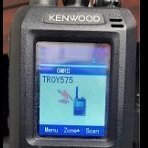
Another Anytone Radio - D890UV (DMR and a planed future update to NXDN as well)
PACNWComms reacted to Lscott for a topic
While I'm not a big fan of Anytone radios, based on my bad past experience with the D878UV's firmware and programming software bugs, The new D890UV looks interesting. Might be worth at least a look. https://www.wouxun.us/item.php?item_id=488&category_id=64 What caught my eye in addition to being a DMR radio looks like they "plan" on adding a second digital mode to it, NXDN. This could spark more interest in this digital voice mode. I already have a bunch of Kenwood NX-200 and NX-300 radios for NXDN. Also the Kenwood NX-1200 and NX-1300 radios, DMR and a few with NXDN, can run either one depending on which one is "activated" and the mode specific firmware loaded. https://forums.mygmrs.com/gallery/image/290-nx-1300duk5/?context=new https://forums.mygmrs.com/gallery/image/251-nx-300jpg/?context=new And this is an example of a mobile NXDN radio. https://forums.mygmrs.com/gallery/image/250-nx-820ghjpg/ The D890 radio would compete with Kenwood's NX-3000 series, which allows both modes, but it's code plug specific. You can only run one digital mode in the code plug at a time. It would be interesting to see if the D890 allows the use of BOTH in the same code plug. I'm sure a few would have preferred P25 Phase 1 with DMR. However DMR and NXDN use the same basic modulation type, 4FSK, so that reduces the complexity. Whereas P25 Phase 1 uses C4FM.1 point -
Radioddity QT80 Pro.
SteveShannon reacted to TNFrank for a topic
The QT80 is an 80w radio. I'll look at the power station display tomorrow to see how much the radio is pulling. AM/SSB isn't s constant like FM would be but I'm sure you know that. That might explain why it's pulling less watts than the rated 80w.1 point -
Radioddity QT80 Pro.
WRYZ926 reacted to SteveShannon for a topic
It’s outside of the laws of physics for a 60 watt radio to only pull 45-50 watts of power when it’s transmitting 60 watts. If a radio is only pulling 45-50 watts it’s probably only transmitting 30-35 watts. No radio is 100% efficient and it’s literally impossible to be more than 100%.1 point -
If you connect two of them in series will your signal go twice as far?!?1 point
-
Wake me when one is released…1 point
-

Repeater frequency coordination
AdmiralCochrane reacted to WRTC928 for a topic
There is no coordination, official or otherwise. I recommend you scan the repeater frequencies for several days to see which ones are in use. Also, look at the listing for your area on this site. Not all repeaters are listed here, but it's a place to start. Find one that doesn't seem to be in use and use it.1 point -
Neat little HF QRP Radio.
TNFrank reacted to Northcutt114 for a topic
That's funny. I watched the video you posted and I thought to myself, "That little mic looks cheaper than the ones that came with my DM32."1 point -
Signed up for a POTA Account.
SteveShannon reacted to TNFrank for a topic
I got a contact with a guy I Hunted on the 5th again today at a different Park. There were some Parks that were showing up on the web site but when I'd tune to them I got nothing. It's just easier to work the Band up and down from 28.3MHz to 28.5MHz until I hear someone calling "CQ POTA".1 point -
Neat little HF QRP Radio.
SteveShannon reacted to Northcutt114 for a topic
I've only recently run across Salty Walt's channel. He has some good content. Would recommend.1 point -
Radioddity QT80 Pro.
SteveShannon reacted to TNFrank for a topic
Got the radio yesterday, set it up today and made a few contacts. This radio is actually a bit smaller than the QT60 but has 20w more power. Seems to work well with the EFHW that's cut for 10M. All in all it's a really decent radio and I even hooked up the external speaker. Still having fun on 10M. 1 point
 -
The Balun is about 8' hanging from the porch then the wire is probably 12'-13' on an angle to the tripod fully extended to 15+ feet. I really hope the extra power and the antenna will help me get a QSO to Japan.1 point
-
What do you tell someone who says they don't know how to use a radio?
TNFrank reacted to Northcutt114 for a topic
This reminds me of one of what I found to be George Carlin's greatest ever lines. He would say "Think about how dumb the average human being is...and then realize that half of them are dumber than that."1 point -
I Love that Call, Marc !1 point
-

Neat little HF QRP Radio.
SteveShannon reacted to WRYZ926 for a topic
Most of us will agree that the screw on connectors are better. But they are larger and cost more. Another reason for using RJ12 or RJ45 is that they are smaller and less expensive. This is important as mobile radios get smaller. And this is especially true with removable head units as there is little extra space in them.1 point -
Neat little HF QRP Radio.
SteveShannon reacted to WRYZ926 for a topic
Most mobile/portable amateur radios use either a RJ12 or RJ45 connector for the microphone. Only the import 10m/11m radios and mobile radios that are IP rated for dust and water will use a screw on mic connector. Most of the radios like the QT60 and QT80 are actually export CB radios that have been modified to work on amateur bands. The only two mobile radios I own that use the screw on mic connectors are the Wouxun KG0XS20G and TYT TH-8600. Both are IP rated for water and dust. All of my other mobile radios use wither the RJ12 or RJ45 connectors and I haven't had any issues with any of them. I have mobile radios from Icom, TYT, Yaesu, and Wouxun with RJ connectors and none have failed on me. The G90 and Yaesu FTDX10 also use RJ connectors.1 point -
Neat little HF QRP Radio.
SteveShannon reacted to WRYS709 for a topic
I have had 3 DB20-G/AT-779UV and one DB25-D all of use the slightly larger RJ-45 and “are moved around a lot” and I have never had a problem with the microphone connection.1 point -
Neat little HF QRP Radio.
Northcutt114 reacted to SteveShannon for a topic
That’s my opinion too. Everyone I’ve seen who has the G90 really enjoys using it and some have purchased a second one.1 point -
Neat little HF QRP Radio.
Northcutt114 reacted to WRYZ926 for a topic
Just my personal opinion. I would skip the G106 and spend a bit more for the G90. The G106 does not have a tuner where the G90 has a tuner and a builtin SWR sweep meter. Plus you can work QRP with any radio by just turning the output power down. Now if you can get the G106 at a good sale price then go for it. You will have to have a way to either tune the antenna or use an external tuner.1 point -
No, not necessarily. For me, that would have been too much for an entry level radio, because when I got my first one, I didn't know exactly what I was going to want and I ended up later buying something else that I haven't outgrown yet. "Entry level" means different things to different people. Maybe you'll never find yourself wanting something the Icom won't do, or you may decide to buy another radio for that specific purpose.1 point
-
Neat little HF QRP Radio.
Northcutt114 reacted to WRYZ926 for a topic
I forgot to add. @TNFrank a QRP radio can be frustrating but it is also a good learning experience with antenna tuning and why quality coax is important. If you want a QRP radio then go for it, just be careful of the cheap knockoffs. And don't get discouraged when you don't make contacts at 5 watts either. I haven't made a whole lot of contacts at 5 watts using SSB but I make plenty of contacts at 20 watts. I have talked to Irish and British stations on 10m SSB using my 20 watt G90 and a dipole antenna. One time I had my 7300 turned down to 2 watts and still made contacts to north eastern Canada on FT8 before.1 point -
Neat little HF QRP Radio.
Northcutt114 reacted to WRYZ926 for a topic
The Icom IC-7300 MkII is closer to $1400 to $1500. You can find the original 7300 for around $1000-$1100 right now. I've seen it as low as $900 with rebates. I have the 7300 and I don't have any plans to upgrade to the 7300 MkII any time soon. One advantage of the 7300 is that it gives you 6 meters along with the HF bands. You have to be careful when buying those Usdx radios on Amazon. There are a lot of junk counterfeits being sold there. I enjoy running QRP . But as others have mentioned it can be very frustrating, especially for someone new. A good resonant antenna and good quality coax is very important when running QRP. A good NanoVNA or antenna analyzer is a must for QRP as you want your antenna to be as efficient as possible. Coastal Waves and Wires on Youtube has some good videos on the different SDX radios.1 point -
Typo corrected, too much blood in the caffeine system this morning.1 point
-
Neat little HF QRP Radio.
Northcutt114 reacted to SteveShannon for a topic
Good job studying for the general exam! Ham Radio Outlet has a brick and mortar store in Phoenix at 10613 N 43rd Ave. https://www.hamradio.com/locations.cfm?storeid=6 They actually let you get your hands on a few different radios so you can see what features you like. See if they’ll let you try a G90, ic-7300 or ft-710. Or go to a swap meet and get a used ic-7300. My opinion of the little QRP rig you linked is that it is a disposable gimmick, nothing more. It might be fun to play with, but it might also ruin the hobby for you. Also note that there are no reviews or ratings, zero, zilch, nada.1 point -
Is it KC4TVZ, aka "The most hated ham radio operator", aka "Kilo Charlie 4 Tango Victor Zulu"? He often transmits on or around 28.425. He's pretty well-known (or notorious, depending on who you ask) in the 10 meter realm. He transmits a recorded "CQ CQ this is Kilo Charlie 4 Tango Victor Zulu" (or something similar) out of Georgia over and over for hours. He's drawn the ire of the FCC, 10-10 International, and countless amateur radio operators. But there's also folks who use his relentless CQs as a beacon to see if 10 meters is open. In other news, I've made several contacts with Japan on 10 meters, especially in the late afternoon when it's morning there. Contests and State QSO Parties are great ways to make contacts, because everybody and their brother is on the air trying to score points. Here's a website that crammifies all the contests and QSO parties into one place. https://www.contestcalendar.com/1 point
-

Emergency comms: HAM or GMRS?
kirk5056 reacted to AdmiralCochrane for a topic
But is is best to learn the advantages and limitations before the emergency to know what to expect from the hardware.1 point -
Playing on 10M SSB.
RoadApple reacted to Northcutt114 for a topic
This is what Gemini says: Beacon transmissions "shoot" across a radio waterfall display as streaks because they are often frequency-hopping, sweeping, or pulsed signals (like GPS, weather beacons, or digital modes) that rapidly change frequency or are present for brief, distinct moments, causing bright lines or dots to appear and scroll as the display stacks past data over time. These visual streaks represent the signal's energy moving across the frequency spectrum (horizontal axis) over a short duration (vertical axis), creating a dynamic, moving pattern rather than a static tone. What You're Seeing (and Why it Looks Like Shooting Streaks): Waterfall Display Basics: A waterfall shows frequency on the horizontal axis and time (past to present, moving down) on the vertical axis, with color/brightness indicating signal strength. Frequency Sweeps: Some beacons (like GPS or navigation beacons) sweep across a wide frequency range in a predictable, fast pattern, creating a diagonal or angled streak as the signal moves. Pulsed/Intermittent Signals: Digital beacons (like SSTV or APRS) transmit short bursts of data. On the waterfall, these appear as bright dots or short horizontal lines that pop up and then fade down the display. Digital Modes (FT8, etc.): These use specific digital patterns that appear as distinct shapes or "blobs" that change frequency and strength, sometimes looking like quick bursts or diagonal movements. Propagation Effects (Flutter): Strong signals, especially on shortwave, can bounce off the ionosphere, causing rapid changes in frequency and strength (auroral flutter), which appear as chaotic, shaky lines or "fluttering" on the display. In essence, the "shooting" is the visual representation of rapid frequency or time-domain changes of a specific beacon, appearing as a moving pattern on the stacked history of the waterfall display1 point -
Playing on 10M SSB.
RoadApple reacted to Northcutt114 for a topic
Cool. Thanks. I'm not at a point where I want to pay for a QRZ subscription, but it looks like that's the only way to get a comprehensive aidf file of all my QSO;s...or whatever the file type is. OK, I found a program on github that will combine multiple logs into one log. Download here if you're interested. Doesn't seem to export international grid data...hmmm. ETA: Ok, it's not the compiler, it's the online map generators. They only add domestic calls, even though my logs on QRZ clearly have the international grid square listed, which is had to have gotten from my logs that I uploaded. Weird. ETAA: Apparently QRZ does export gridsquare location to third party apps if you are a free member. Ugh..... I'm going to bed.1 point -
I've never delved into how beacons work or why they shoot across the waterfall.1 point
-
I just picked up an Anytone D168UV HT and one very practical benefit of DMR (on radios that support it) is repeater roaming. I'm part of a commercially licensed emcomm network and an amateur DMR network in my area and it's really useful to be able to roam between repeaters when driving long distances.1 point
-
Non linked DMR repeaters exist. The difference is all the talkgroups are local only. Otherwise everything else is basically the same.1 point
-
If you want to get down into the weeds a bit more we can discuss talk-groups. This is how you can logically subdivide a frequency into more private groups on the same frequency. You may have several groups all sharing the same frequency but have no interest in hearing traffic between others not in the group. While this could sort of be done with tones on analog radios you only have so many. With talk-groups you can have around 16 million. This means you can even direct a call to a specific person if required without bothering anyone else. Now the one trick that analog radios can't do but DMR can, because it's TDMA, is what is called "single frequency repeater" mode. This means with the right firmware in a centrally located radio it can function as a repeater using only one frequency, thus tuned cavity filters are not required! The Anytone D578UV mobile DMR radio can do this as one example.1 point
-
What, if anything, does DMR bring to the table?
WRUU653 reacted to SteveShannon for a topic
It’s similar in that it allows bandwidth to be shared, but it does so by time-multiplexing the two signals so they occupy exactly the same bandwidth but they take turns doing so. So for this fraction of a second my signal on time slot 1 is received and transmitted and in the next fraction of a second the signal on time slot 2 is received and transmitted. This switching between time slots happens thousands of times each second.1 point -
What, if anything, does DMR bring to the table?
WRUU653 reacted to SteveShannon for a topic
In the amateur radio world, a talk group is a virtual construct connected to a DMR network, such as Brandmeister, TGIF, etc, via the internet. Every repeater can be connected to any talk group (depending on what the repeater operators allow). Each repeater typically has two time slots so two talk groups may simultaneously be active on each repeater. A talk group that’s active on one time slot of the repeater by default is said to be a static talk group but a person using that repeater and time slot may often connect the time slot to another talk group dynamically. Dynamic talk groups typically time out and the repeater/time slot reconnects to its static talk group. Using a hotspot is nearly identical to using a repeater except it’s in your house. You set it up to link to one or more DMR networks (and/or YSF, DSTAR, etc, and you then configure which talk groups you want to be static. Also, unless you buy (or build) a duplex hotspot you only have one time slot.1 point


